Hist ric Hartfrd Synaggues
Although a synagogue structure is not necessary for Jewish prayer, the building of a synagogue represents the creation of a center for both worship and community. In a synagogue, Jews join together not only to pray, but to study, socialize, educate their children, and to care for the needs of their own members as well as the larger community. There were once thirteen synagogues in Hartford, CT. There are no longer any active congregations remaining in the city, although a number of the buildings are still in existence. Some are abandoned and have fallen into disrepair, and others have been repurposed, often as churches. This web exhibit utilizes the archive of the Jewish Historical Society of Greater Hartford to offer images and information on the synagogues that once existed in Hartford.



Congregation Beth Israel Synagogue
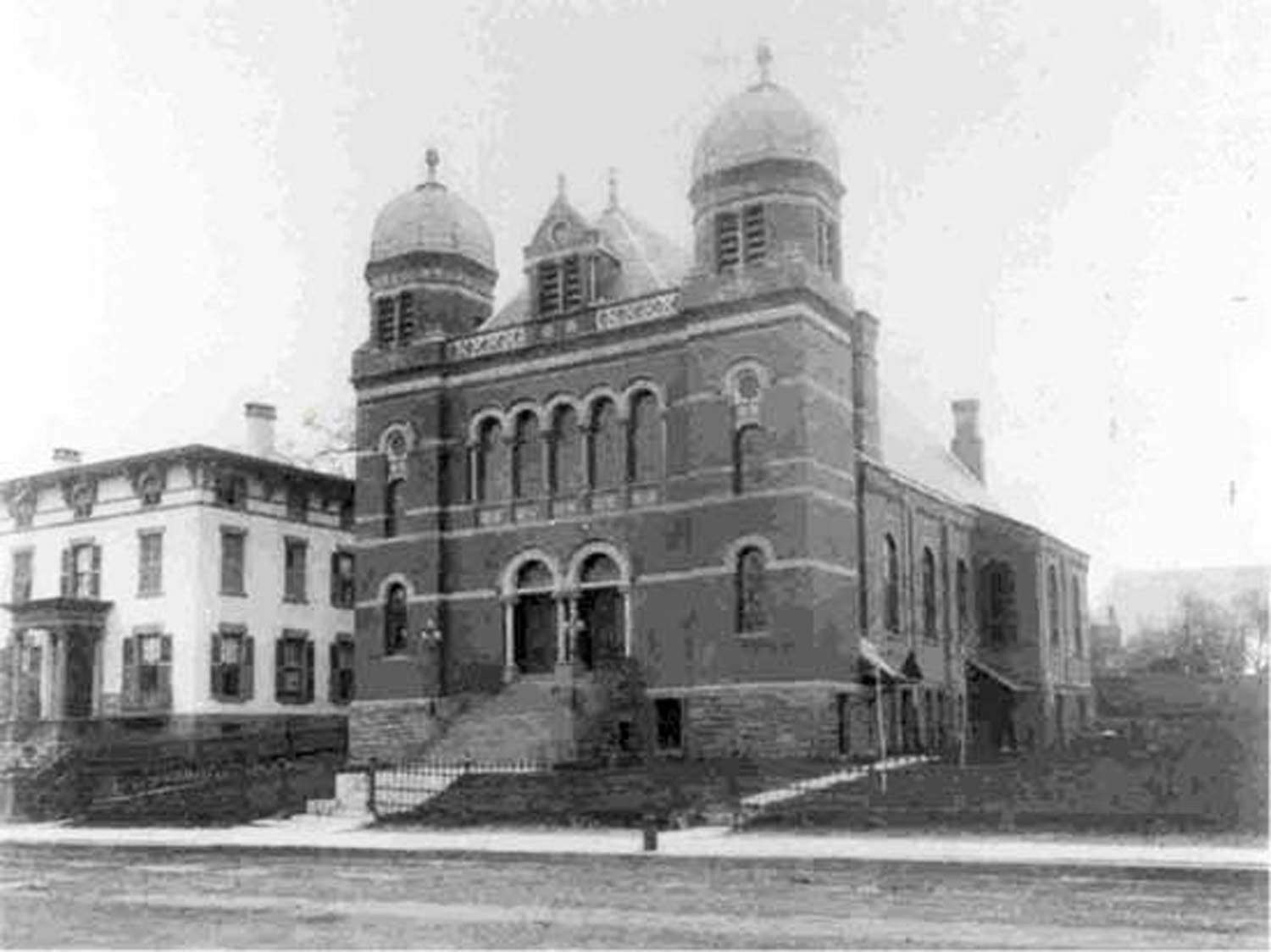
Highlights
- Date of Construction: 1876
- Address: 21 Charter Oak Avenue
- Architectural Style: Romanesque Revival
- Architect: George Keller
- Branch: Orthodox >> Reform
- Background: German
After a fire destroyed Touro Hall (the first synagogue site in Hartford), Congregation Beth Israel built the first building to be constructed in Connecticut for use as a synagogue on Charter Oak Avenue. Jewish congregations began to form in Connecticut in 1843 when the General Assembly took action to permit public worship by Jews for the first time. In the 1870s, Beth Israel became the first congregation in the state to have the size and financial strength to build. It would also be the first congregation in the area to transition away from its established Orthodox roots to join the Reform movement when it became affiliated with the Union of American Hebrew Congregations in 1878.
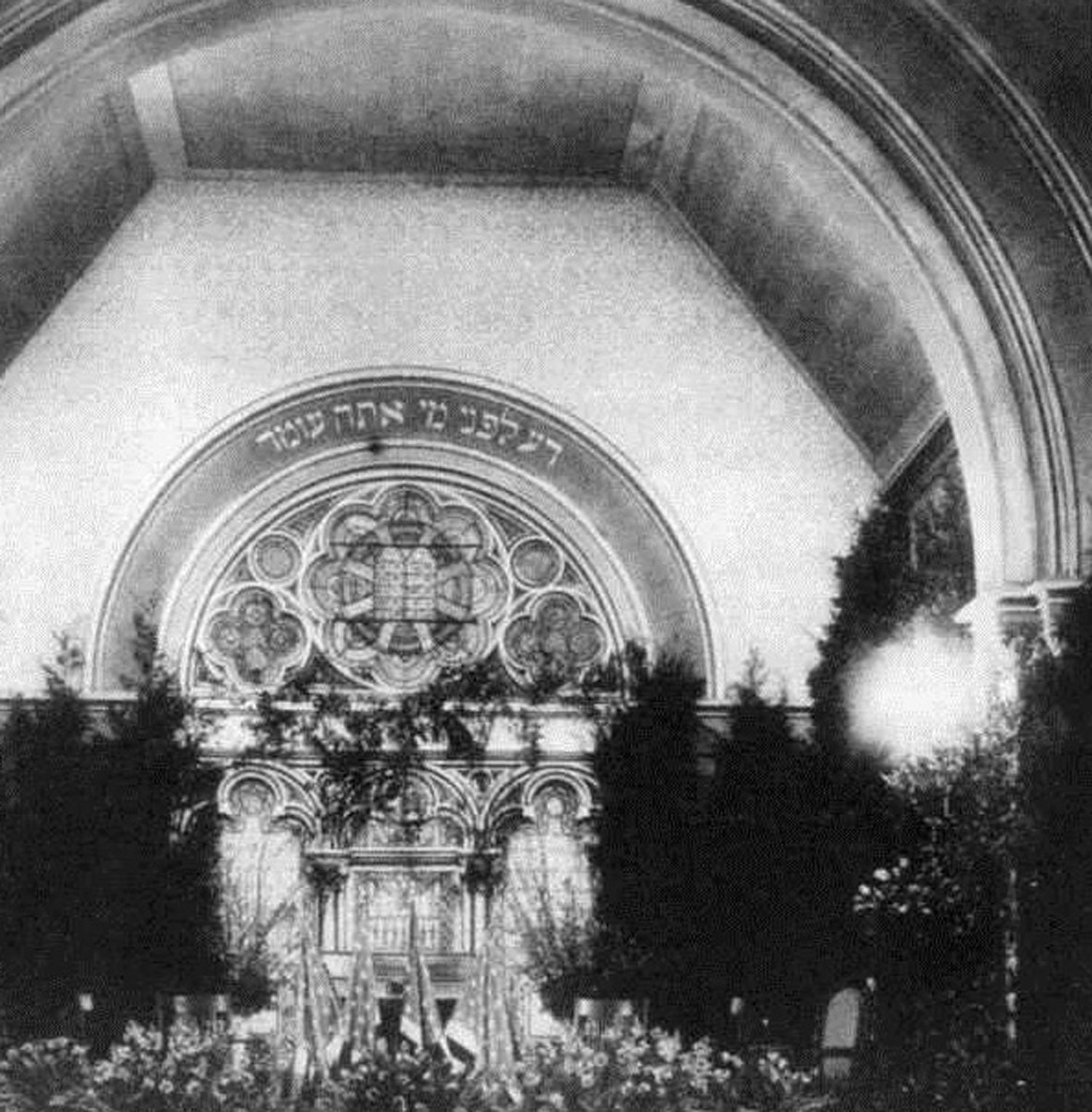
Designed by renowned architect George Keller, this building (depicted above, with interior to the right) was dedicated in 1876. An architectural landmark, it was home to the congregation until 1935.
The large open interior seats 600 people in plain wooden pews. At the front are the recessed space for the ark and three stained-glass windows; the central rounder shows the Decalogue, while the flanking windows are quatrefoil-shaped columns with foliate capitals similar to those on the front elevation and support a blind arcade of three round arches under the windows. How this arrangement worked with the Tiffany ark enframement now at Temple Beth Israel, West Hartford, is not certain, but the Tiffany framework may simply have fitted around and over the permanent existing windows.